A Market Basket for a Flexible Supper
A market basket for a flexible supper helps you turn appealing produce, a dependable staple and one flavourful accent into a meal without a fixed recipe.
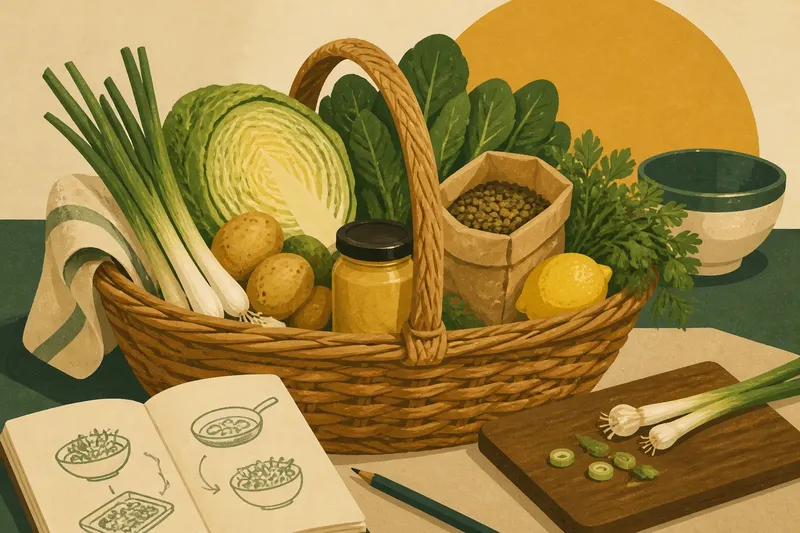
What should you buy when you want supper to take shape around what looks good, rather than around a recipe you have already chosen? A market basket for a flexible supper starts with a few ingredients that can share a plate, then leaves the exact dish open until you get home. The useful skill is choosing ingredients with more than one possible role, not collecting every attractive thing in the market.
Think of the basket as a small set of compatible parts: something filling, a few vegetables or fruits, and one or two accents that make the combination feel deliberate. The result might become a warm bowl, a tart, a pan of vegetables with eggs, or something else entirely. A fixed recipe is optional; a sensible way to avoid stranded ingredients is not.
How do you choose ingredients before deciding on a dish?
Begin with what is appealing and in good condition, then ask what it could sit beside. A bundle of spring onions, a firm cabbage and a bag of lentils can lead in several directions. The point is not to buy ingredients that taste identical. It is to find a shared route through texture, cooking method or familiar flavour.
Choose a small group, usually from these roles:
- A filling base: potatoes, rice, bread, beans, lentils, noodles or eggs.
- A main vegetable: something substantial enough to shape the meal, such as squash, cabbage, mushrooms or aubergine.
- A supporting vegetable: a contrasting ingredient, perhaps onions, carrots, leafy greens or tomatoes.
- A flavour accent: lemon, mustard, chilli, olives, cheese, yoghurt, capers or a small bunch of herbs.
- A cooking fat or sauce element: olive oil, butter, tahini, stock or coconut milk, if you do not already have a suitable option at home.
These are roles, not compulsory purchases. If your cupboard already holds rice and oil, buying more merely because the list says so is an efficient way to own extra rice and oil.
At the stall, notice what is plentiful, ripe or pleasantly unusual. Then make one connection before adding it to the basket: will it roast beside the main vegetable, soften into a pan, work raw as a sharp counterpoint, or provide something creamy or salty? If the answer is no, it may be a separate plan rather than part of this supper.
Which ingredients make a useful market basket?
Useful ingredients have more than one plausible destination. Cabbage can be shredded into a crisp salad, cooked until tender in a pan, or roasted in thick wedges. Potatoes can support a meal, join a soup, or become a crisp edge beside eggs. Beans can make a vegetable dish more substantial or be dressed as a salad. Such flexibility matters more than buying ingredients that sound impressive together.
Consider how the basket balances. A group of soft, mild ingredients may need something crisp, sour, hot or salty. A collection of firm vegetables could use a sauce or a soft base. You do not need a perfectly balanced assortment; you do need to notice when everything is likely to have the same texture and flavour.
Say you find small potatoes, a bunch of spring onions, leafy greens and a jar of mustard already at home. The potatoes suggest a filling base, while the greens offer a quick-cooking contrast; mustard can become a dressing or a sharp note in a warm pan. You might later decide on a warm potato plate with greens and mustard dressing, with the spring onions scattered through it. The basket has suggested a direction without prescribing the dish.
One practical rule: buy one ingredient because it looks good, not five that need separate explanations.
How many ingredients should you buy for an open-ended supper?
Keep the fresh part of the basket compact enough that each item can be noticed and used. A principal vegetable, a supporting one and an accent are often easier to work with than a parade of unrelated produce. Add a base only if you need one. This is a planning habit, not a fixed formula: appetite, household size and what is already in the kitchen all matter.
Before buying, picture the ingredients in one pan, pot or serving dish. If they would require several unrelated preparations, decide whether that is genuinely the supper you want. A market basket should allow a little choice after shopping, not quietly assign you a series of small jobs.
It also helps to distinguish ingredients that need using soon from those that can wait. Ripe tomatoes or tender leaves may set the order of cooking; firm roots and dry staples offer more room. If you already have a short-lived ingredient at home, let it influence the basket rather than treating the market as a clean slate.
What can you cook from the basket once you get home?
Choose the method that suits the ingredients’ texture and the time you have. Roasting favours vegetables that can tolerate a longer, dry heat and develop browned edges. A pan suits ingredients that soften quickly or benefit from frequent turning. A pot can bring beans, grains and vegetables together, while a raw preparation keeps crisp produce crisp.
Then choose the meal’s shape:
- A bowl: place a cooked grain, potato or bean base beneath cooked vegetables, then finish with a dressing or sauce.
- A pan supper: cook the slower ingredients first, add quicker-cooking greens towards the end, and use an egg, beans or another substantial ingredient if the meal needs it.
- A tray of vegetables: roast compatible pieces together, then add a sharp or creamy accent at the table.
- A salad with substance: combine crisp produce with beans, potatoes, bread or another filling component, using dressing to connect them.
These are useful shapes, not recipes hiding in a different coat. The order of cooking should follow the ingredients: dense pieces generally need more time than tender leaves. Keep any delicate accent—such as soft cheese, fresh herbs or a dressing—aside until the cooked ingredients are ready, unless the particular preparation calls for something else.
For products where handling or preparation depends on the label, manufacturer’s instructions or local rules, follow those directions. For the rest, ordinary observation is enough: a piece that is still firm may need more cooking; a pan that is drying out may need a little liquid or a lower heat.
How do you make unlike ingredients taste as if they belong together?
Look for a bridge. It can be a shared flavour, a matching texture or a contrast that feels intentional. Potatoes and greens become more coherent with mustard or vinegar. Beans and roasted vegetables may welcome lemon or a spoonful of yoghurt. Sweet vegetables can take well to salty cheese or a sharp dressing. The ingredient that connects the plate is often already in the cupboard.
Use accents with restraint at first. A salty ingredient, chilli paste or strong cheese can dominate a mild group, so add some, taste, and adjust. A squeeze of lemon or a splash of vinegar can make a rich dish feel brighter; oil, butter or yoghurt can soften sharpness. Neither move is a rescue trick. They are ways to tune the flavour once you can taste the actual combination.
Texture is another bridge. Crisp raw onion can enliven soft beans; toasted bread can give a tender vegetable dish a firm edge. You need not add every possible contrast. One deliberate change is usually clearer than a handful of unrelated toppings.
What if the market has different ingredients than you expected?
Keep the role, and change the ingredient. If the leafy green you wanted is absent, another quick-cooking green may suit the same pan. If a particular bean is unavailable, use another cooked bean or change the base to potatoes or bread. The replacement should fit the same job, not merely occupy the same space in the bag.
When considering a swap, ask three things: does it cook in roughly the same way, does it bring a similar texture, and will the flavour accent still make sense? A tender vegetable can replace another tender vegetable more easily than it can replace a dense root that needs a longer cooking time. If the timings differ, cook the slower item first or keep the parts separate until serving.
For a sharper change, shift the format. A basket of vegetables that no longer suits a warm pan may work as a salad alongside bread, or as a soup with a suitable base. Let the available ingredients set the practical limits, then choose the simplest meal shape that brings them together.
Can you plan a flexible supper without buying too much?
Start by checking the fridge, cupboard and fruit bowl before you leave. Treat usable food at home as part of the basket, particularly ingredients that need attention soon. A half-used jar of olives, a few eggs or leftover cooked grains may supply the accent or base that would otherwise go in the shopping bag.
Make a short mental plan for what each fresh purchase could do, including a second use if the first supper changes. A bunch of carrots could be roasted one evening and grated into a lunch salad; extra cabbage could join a soup or a quick slaw. These are possibilities, not assignments, and they should be plausible for your household rather than ambitious enough to become a separate hobby.
When you get home, put the most perishable ingredients where they are easy to see and decide which one should lead the next meal. A flexible supper begins at the market, but it is completed by using what you bought before it becomes an obscure drawer discovery. Keep the basket small, leave room for a change of mind, and let the final plate answer to the ingredients actually on hand.